 Still somewhat recovering from being the host country of the EuroCup, Vienna was yet another beautiful stop on our trip. As we were down to just two travelers (AC and I), I felt a bit more comfortable dictating our tour stops. We made a beeline to the Albertina, which was the former home of the Viennese monarchy, and is now a fine art museum. In addition to an impressive permanent collection, they had very interesting exhibitions of Oskar Kokoschka and Paul Klee (both of whom we were unfamiliar, but really enjoyed!). The top floor of the building has been restored to its original palatial elegance, which was gaudy but neat to see.
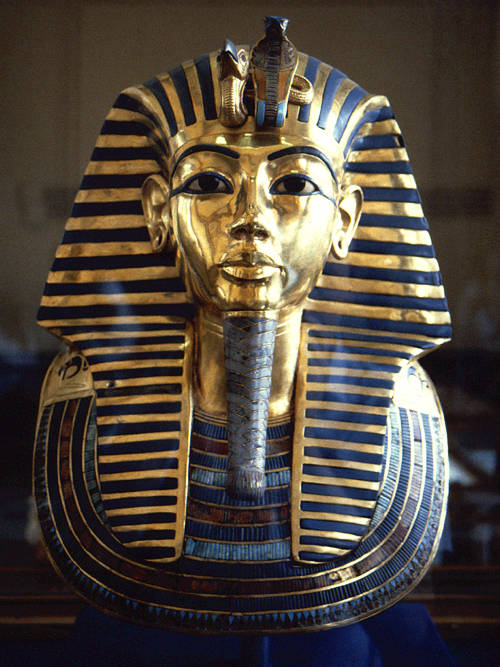
I was not the only one excited by the local museums. AC is a freak about ancient Egypt, and we were lucky enough to catch the traveling exhibition of King Tut. It was totally mind-blowing. Beside the fact that you're looking at treasures from 3000+ years ago (many of which look good as new), he has an fascinating story I wasn't aware of.
King Tut was literally the boy king, assuming the throne at the age of 10. In ancient Egyptian culture, your transition into the afterlife was more important than your life on Earth. Typically a king immediately began to prepare for his death upon his coronation. Little did anyone know that his death would come so soon -- at the age of 19. It's unclear what happened, but what they do know is he must have seriously pissed someone off. In addition to speculation that his untimely death was a result of some shady dealings (scholars currently think, however, he may have died from a broken leg) they tried to wipe him completely from history. His name was removed from all records, all statues in his image were changed or destroyed and he was largely forgotten. This is particularly devastating in their culture because the more you were remembered the better you fared in the afterlife. Being forgotten was worse than anything.
But their plan backfired. Unfortunately, being a 'famous' dead king meant everyone knew where you were buried. Thieves often ransacked their crypts and stole all the precious items leaving very little behind. This makes archaeological discovery difficult -- but this was not the case for King Tut. Since they took such great pains to erase him from the history record, his crypt was kept in tact until its eventual discovery in the 1920s. Although his hurried burial made the crypt look like a rush packing job, it was the most complete find ever and took over 10 years to recover and catalog all the items.
The end result was that King Tut is not only very remembered, but is now the most famous Egyptian King in all the world! I'm not a believer in the afterlife personally, but I couldn't resist hoping that King Tut was slyly smiling somewhere enjoying an awesome afterlife because of his new-found fame.
0 comments:
Post a Comment